Trick or Treat | FastSEO Guru - Free Printable Coloring Pages for Kids
Free Trick or Treat Coloring Pages – Candy, Costumes & Halloween Images to Color for Kids
Our Coloring Pages collection brings together free, printable trick-or-treating designs for children of all ages. Whether you are looking for cute drawings to color featuring children in costumes carrying candy bags for toddlers and preschoolers, easy colouring sheets with night scenes for young learners, or detailed trick-or-treat street scenes for older kids and adults, every page in this collection is completely free to download and print at home or in the classroom. Trick-or-treating is the most beloved Halloween activity for children worldwide – and these Halloween images to color bring all the excitement of October 31st to life on paper.
0 Topics2 Coloring Pages
🖍️ Trick or Treat Coloring Pages
Sort by:
Advertisement (Header)
Advertisement (Row 1)
You've viewed all 2 coloring pages!
– The Heart of Night
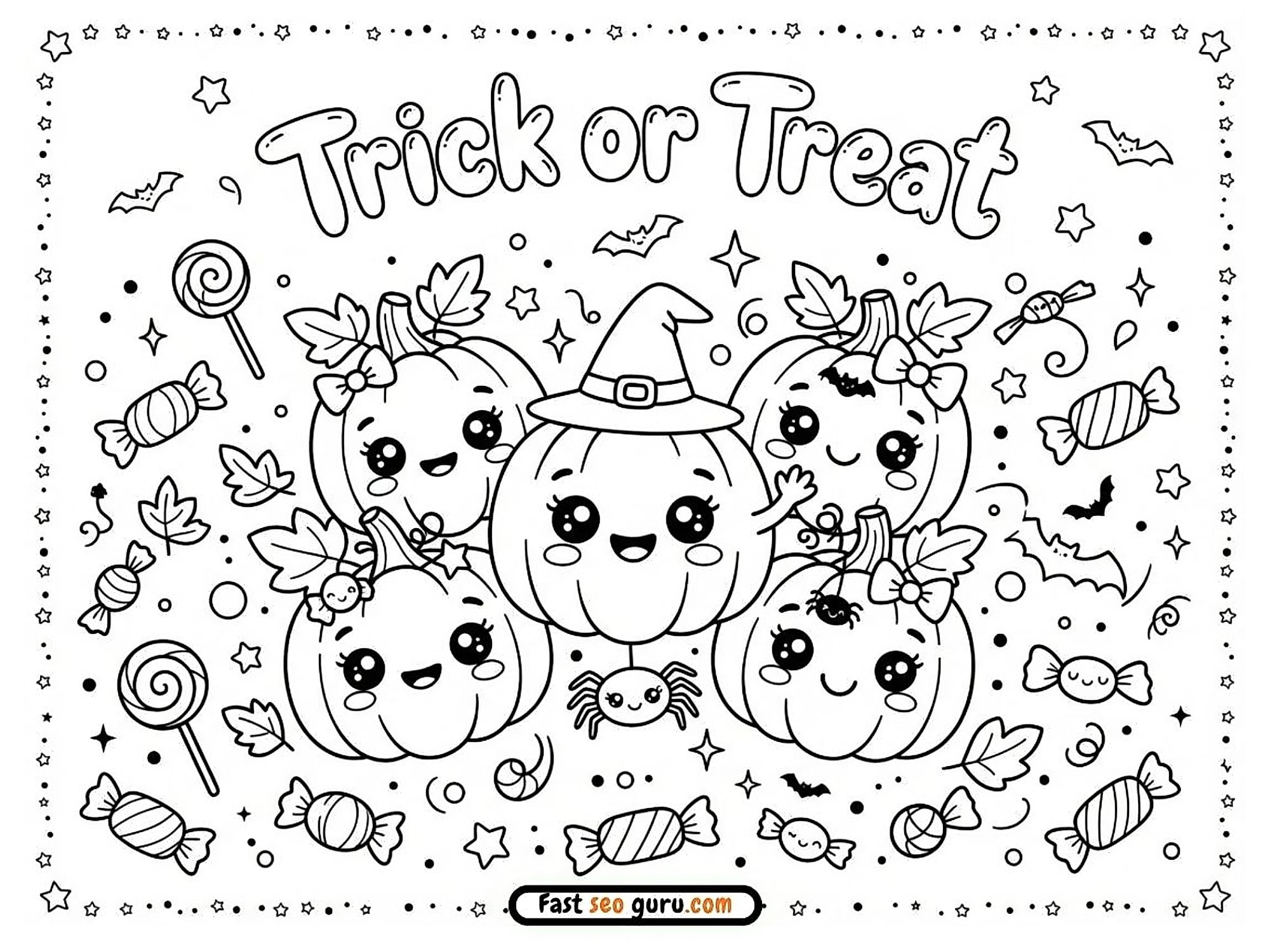
For most children, trick-or-treating is the highlight of the entire Halloween season. Dressing up in a favorite costume, walking through the neighborhood in the dark, and collecting candy from door to door is one of the most anticipated experiences of the childhood year. Our trick or treat coloring pages capture every exciting element of Halloween night – from cute drawings to color featuring smiling children in costumes to detailed Halloween street scenes filled with jack-o'-lanterns, candy bags, and neighborhood houses glowing in the October dark.
The tradition of trick-or-treating as we know it today is surprisingly recent – but its roots stretch back over a thousand years through ancient Celtic festivals, medieval European customs, and the immigrant traditions that shaped Halloween in North America.
The earliest roots of trick-or-treating trace back to the ancient Celtic festival of Samhain, observed around 2,000 years ago. During Samhain, people lit bonfires and wore costumes to ward off wandering spirits on the night when the boundary between the living and the dead was believed to be thin. Food and drink were left out as offerings to the spirits – a practice that established a very early connection between Halloween night, costumes, and the giving of food.
Soul Cakes – The Original Halloween Treat
One of the most direct ancestors of trick-or-treating was a medieval practice called souling. Beginning in the Middle Ages, poor people – often children – would travel door to door on All Souls Day, November 2nd, offering prayers for the souls of the dead in exchange for small round spiced cakes called soul cakes. The more soul cakes a person collected, the more prayers they said for the dead.
This practice of going door to door in exchange for food was widespread across England, Ireland, and Scotland and is widely recognized as one of the earliest direct precursors of modern trick-or-treating.
Guising – Costumes Enter the Tradition
By the late 16th century in Scotland and Ireland, a related practice called guising had developed alongside souling. Rather than offering prayers, guisers – people dressed in disguise – would visit homes and perform a small entertainment in exchange for food, coins, or other gifts. They might sing a song, tell a joke, recite a poem, or perform a trick. The word guising comes directly from the word disguise, referring to the costumes worn to conceal the performer's identity.
This practice, known as guising, still echoes today in the ghost and witch costumes that remain Halloween favorites. Guising is widely recognized as the most direct historical ancestor of the modern trick-or-treating tradition.
britannica
From Pranks to Candy – How Modern Trick-or-Treating Developed
By the early 20th century in North America, Halloween had become increasingly associated with pranks and vandalism by young people – with some communities reporting significant property damage on October 31st each year. Community leaders, schools, and local organizations began promoting a more organized and child-friendly version of the holiday, encouraging children to go door to door in costume for treats rather than committing pranks.
The earliest usage of the phrase "trick or treat" in connection with Halloween was traced by etymologist Barry Popik to a 1927 Alberta newspaper article reporting on pranksters demanding "trick or treat" at houses. The phrase spread rapidly across North America through the 1930s and 1940s.
National Geographic
After the Second World War, when rationing ended and candy was once again readily available, the rapid development of suburban neighborhoods where it was easier than ever for kids to travel from house to house fueled the rise of the tradition. By the 1950s, store-bought individually wrapped candy had replaced homemade treats and other gifts as the standard Halloween offering, and trick-or-treating had become the beloved childhood tradition recognized worldwide today.
National Geographic
Candy, Pop Culture, and the Modern Tradition
The 1950s cemented trick-or-treating in American popular culture through two key moments. In 1951, a Peanuts comic strip by Charles Schulz featured the phrase "tricks or treats," bringing it to a mass readership for the first time. The following year, Disney released a short animated film titled Trick or Treat featuring Donald Duck – further establishing the tradition in the popular imagination of American children and families.
By the 1970s, store-bought candy had become the overwhelmingly dominant Halloween treat, and trick-or-treating had spread from North America to countries around the world.
What Makes Trick or Treat Coloring Pages Special
Trick or treat coloring pages capture the most joyful and personally meaningful part of Halloween for most children – the night itself. Unlike other Halloween symbols such as skeletons or haunted houses, which children engage with primarily through decoration and imagery, trick-or-treating is something children actually do and experience firsthand. Coloring a trick-or-treat scene connects directly to a child's own memories and anticipations of Halloween night.
The visual elements of trick-or-treating – colorful costumes, overflowing candy bags, jack-o'-lanterns on doorsteps, neighborhood streets lit by porch lights and moonlight – give children a rich and personally resonant set of images to color, making these some of the most emotionally engaging Halloween images to color in the entire collection.
Trick or Treat Coloring Pages as Learning Worksheets for Preschool and Toddlers
Trick or treat images to color are among the most engaging and motivating early learning tools in any Halloween coloring collection. Young children who are anticipating Halloween night are naturally excited about costume and candy themes, making these pages ideal easy coloring pages for toddlers and preschoolers who respond to personally meaningful subjects.
Parents and teachers can use trick or treat colouring sheets as a starting point for simple conversations about Halloween traditions – what children wear as costumes, how they say trick or treat, and what kinds of candy they hope to collect. These conversations build vocabulary, sequencing skills, and narrative language alongside creativity and fine motor development.
Trick or treat coloring worksheets also work beautifully as pre-Halloween activity pages in the days leading up to October 31st, helping young children process their excitement about the upcoming night through creative play.
How to Use Trick or Treat Coloring Pages at Home and in the Classroom
At Home
Set up a Halloween coloring station with trick or treat pages alongside bright, bold colored pencils and markers for vivid costume effects. While children color their cute drawings to color, talk about what costume they are planning to wear, which houses they are going to visit, and what their favorite Halloween candy is. Completed trick or treat pages make wonderful pre-Halloween decorations and serve as a lovely keepsake of each year's Halloween celebrations.
In the Classroom
Trick or treat colouring sheets work excellently as Halloween party activity stations, early finisher tasks, and creative writing starting points throughout October. Teachers can ask students to write about what costume their coloring page character is wearing, where they are trick-or-treating, and what happens when they knock on a mysterious door. For preschool and toddler groups, simple costume and candy bag outlines work beautifully as easy coloring pages paired with color recognition and counting activities – counting candy pieces is a natural and fun early math activity.
Printing Tips for the Best Results
Print on white cardstock paper for the crispest lines and most vibrant colors. Set your printer to Fit to Page and High Quality for the sharpest output. All pages fit both US Letter (8.5 x 11 in) and A4 paper – making them ideal colouring in pages for both home and classroom use worldwide.
Trick or treat coloring pages look spectacular in bold, bright Halloween colors – vivid orange for pumpkins, any color combination for costumes, and rich purples and blues for the Halloween night sky. Candy bags and buckets look great in classic Halloween orange or black with colorful candy spilling out. Encourage children to color each piece of candy a different color for a wonderfully vivid and creative Halloween effect.
Short Fun Facts – Trick or Treating 🍬🎃
The practice of going door to door for food on Halloween traces back over 1,000 years to a medieval custom called souling, where poor people offered prayers for the dead in exchange for small spiced cakes called soul cakes.
The word guising – one of the earliest direct ancestors of trick-or-treating – comes from the word disguise, referring to the costumes worn by performers who visited homes in exchange for food or coins in Scotland and Ireland from at least the 16th century.
The earliest known written record of the phrase "trick or treat" in connection with Halloween appeared in a Canadian newspaper in 1917 in Ontario – over 100 years ago.
Trick-or-treating became widespread across North America after World War II, when sugar rationing ended and candy became widely and cheaply available for the first time.
In 1951 a Peanuts comic strip by Charles Schulz featured the phrase "tricks or treats," and in 1952 Disney released a short animated film called Trick or Treat – both helping cement the tradition in American popular culture.
Early trick-or-treaters in North America received fruit, homemade baked goods, coins, and small toys rather than candy – store-bought individually wrapped candy only became the standard Halloween treat in the 1950s and 1960s.
Today Halloween is one of the biggest candy-selling periods of the year in the United States, with an estimated 90 million pounds of chocolate candy sold during Halloween week alone.
Trick-or-treating has spread from North America to countries around the world and is now celebrated in parts of Europe, Australia, Latin America, and beyond – making it one of the fastest-growing Halloween traditions globally.
Why Kids Love Trick or Treat Coloring Pages
Trick or treat coloring pages are unique in the Halloween collection because they connect directly to something children actually experience and look forward to in real life. Coloring a child in a costume carrying a candy bag is not just a Halloween activity – it is a chance for children to imagine, relive, and anticipate their own Halloween night. The bright costumes, overflowing candy bags, and glowing porch lights give children a wonderfully colorful and personally meaningful set of Halloween images to color, making these some of the most motivating and joyful colouring sheets in the entire Halloween collection. Coloring trick or treat scenes builds fine motor skills, encourages creative color choices, and gives children a satisfying screen-free activity that connects naturally to their most treasured Halloween memories and anticipations.
Frequently Asked Questions
Are these trick or treat coloring pages free to print?
Yes, every page in this collection is completely free to download and print. No account or payment is required.
What paper size do these coloring sheets fit?
All pages fit both US Letter (8.5 x 11 in) and A4 paper perfectly – ideal colouring in pages for home and classroom use worldwide.
What age group are trick or treat coloring pages best for?
Simple costume and candy bag designs make excellent easy coloring pages for toddlers from around age 2 and preschool children, while more detailed Halloween night street scenes work well for children aged 5 and up and older children and adults who enjoy detailed Halloween colouring sheets.
Where did trick-or-treating come from?
Trick-or-treating developed from several older traditions including souling – a medieval practice of going door to door offering prayers in exchange for food – and guising, a Scottish and Irish custom of performing entertainments in costume in exchange for treats. The modern form developed in North America in the early 20th century and became widespread after World War II when candy became cheaply and widely available.
When was the phrase "trick or treat" first used?
The earliest known written record of the phrase "trick or treat" in connection with Halloween appeared in a Canadian newspaper in Ontario in 1917. The phrase spread rapidly across North America through the 1920s, 1930s, and 1940s as community organizations promoted the candy-collecting tradition as an alternative to Halloween pranks and vandalism.
What colors should my child use for a trick or treat coloring page?
Classic orange and black work beautifully for pumpkins and night sky backgrounds, while costumes can be colored in any combination a child chooses – the more colorful the better! Candy bags look great in bright colors with individual candies each colored differently for a wonderfully vivid Halloween effect.
Why did candy become the standard Halloween treat?
Candy replaced homemade treats and other gifts as the standard offering during the 1950s, when sugar rationing ended after War II and candy manufacturers began producing individually wrapped candies specifically marketed for Halloween distribution. Store-bought candy was easy to give, easy to collect, and safe to accept from strangers – making it the perfect Halloween treat for the growing suburban trick-or-treating tradition.
Can I use these pages in my classroom?
Yes. All pages are free to print for personal and classroom use, making them ideal for parties, October activity stations, creative writing lessons about Halloween night, and pre-Halloween countdown activities for toddlers and preschool groups.