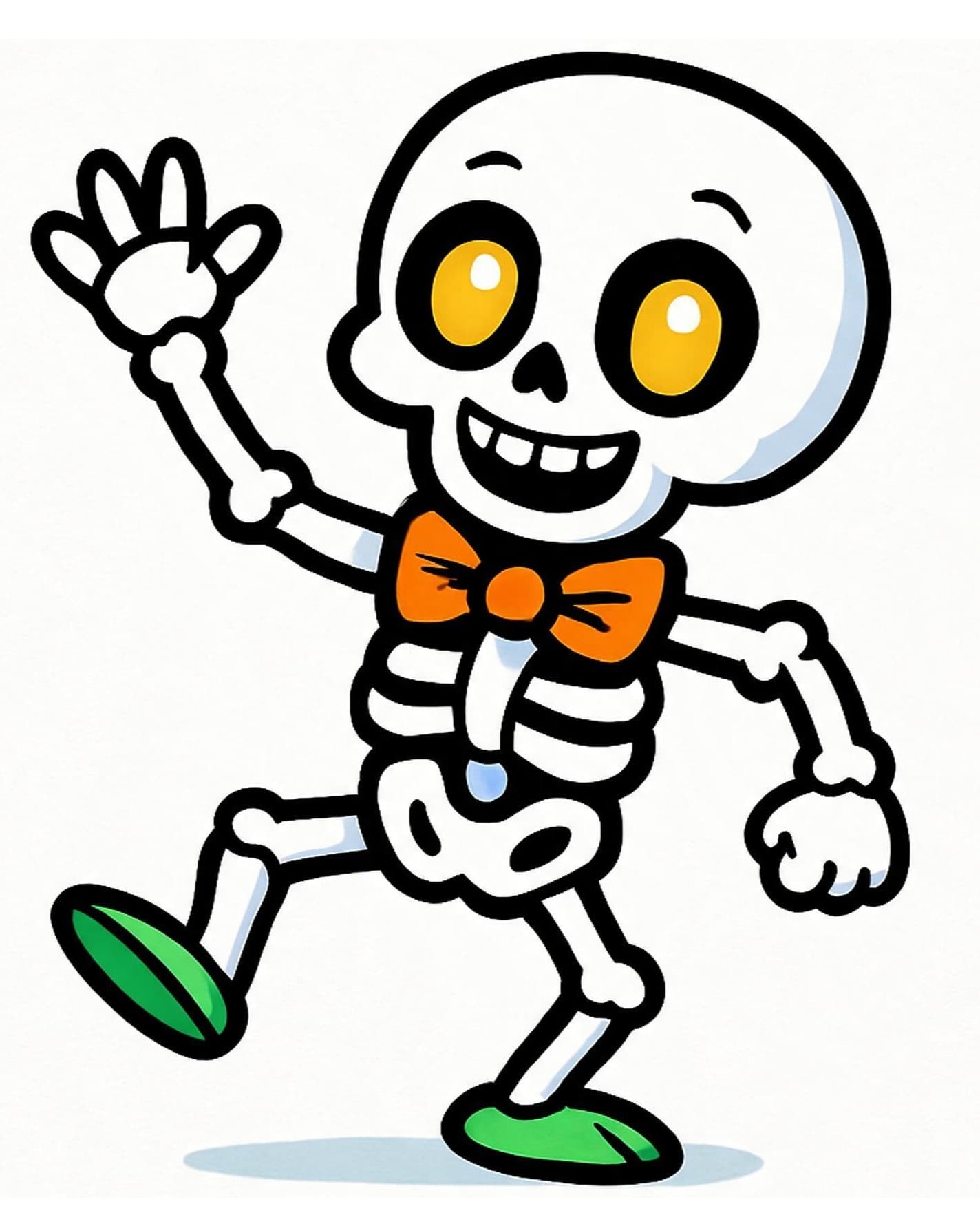
Our Coloring Pages collection brings together free, printable skeleton designs for children of all ages. From simple, friendly skeletons for younger children to detailed skull and full skeleton scenes for older kids and adults, every page is free to download and print at home or in the classroom. Skeletons are one of 's oldest and most universal symbols – and one of the few that also opens up a genuine conversation about the human body, science, and anatomy. Perfect for October activities, classroom Halloween parties, and educational crafts.
0 Topics0 Coloring Pages
🖼️
No coloring pages in this category yet
Be the first to upload a coloring page to the Skeleton category!
Skeletons and – The Original Spooky Symbol
The is in many ways the most fundamental Halloween symbol of all. Unlike ghosts, witches, or vampires – which belong to the of legend and folklore – skeletons are entirely real. Every living person carries one. That combination of the familiar and the macabre is exactly what has made the skeleton such an enduring part of Halloween imagery for centuries.
Skeleton coloring pages give children a wonderfully versatile creative subject. A skeleton can be friendly, funny, and completely unthreatening, while a more detailed skull or graveyard scene offers a satisfying challenge for older children who enjoy dramatic Halloween artwork.
The History of Skeletons and Halloween
Bones and the Ancient World
The connection between bones and death is as old as humanity itself. In virtually every culture in human history, bones and skulls have served as symbols of mortality – a reminder that all living things eventually die. The ancient Celts lit enormous bonfires during Samhain – fires that historians believe were originally called bone fires, because bones from the harvest were thrown into them. This association between bones, fire, and the transition between the living and the dead placed skeletal imagery at the very heart of the festival that became Halloween.
Skeletons were also seen as a symbol of the natural cycle of life and death during Samhain. This was a time when the usually clear boundaries between the worlds of the living and the dead blurred and overlapped – and dressing as the dead or as skeletons became associated with the of Halloween.
Skeletons in Medieval Art and Culture
Throughout the Middle Ages in Europe, skeletons and skulls became a dominant motif in art, literature, and religious practice. The Latin phrase memento mori – meaning remember that you will die – was used across medieval European culture as a reminder of human mortality. Paintings, carvings, and manuscripts regularly featured skulls and skeletons as symbols of the shortness of life and the certainty of death.
In 1538, artist Hans Holbein the Younger gave the Grim Reaper the appearance of a cloaked skeleton – an image that remains one of the most recognized figures in Western visual culture and a direct ancestor of the Halloween skeleton decorations we see today.
From Symbol of Death to Halloween Icon
Over centuries, the skeleton shifted from a genuinely sobering religious symbol to a broader cultural image associated with Halloween and the supernatural. By the time Halloween became popular in North America in the late 19th and early 20th centuries, the skeleton was already firmly established as one of its central visual symbols – appearing on decorations, costumes, and greeting cards alongside pumpkins, ghosts, and witches.
Today the skeleton exists across the full range of Halloween imagery – from genuinely spooky graveyard scenes to cheerful, dancing cartoon skeletons that children find more funny than frightening.
Skeleton Coloring Pages as an Educational Tool
One of the things that makes skeleton coloring pages particularly valuable is their dual purpose – they work equally well as Halloween fun and as a genuine introduction to human anatomy. Adults have 206 bones throughout their bodies. But children actually have about 300 bone parts – many of which gradually fuse together as the body grows to maturity.
The Washington Post
Coloring a full skeleton gives children an intuitive introduction to the major bones of the human body – the skull, ribcage, spine, femur, and smaller bones of the hands and feet. Teachers and parents can use skeleton pages to introduce simple anatomy vocabulary alongside the Halloween coloring activity, connecting science and art in a natural and engaging way.
Skeletons Around the World – Halloween and Beyond
Skeletons are not exclusively a Halloween symbol. In Mexico, the Day of the Dead – Día de los Muertos – is celebrated on November 1st and 2nd, directly overlapping with the Halloween season. During this celebration, colorful skeleton figures called calaveras are used in decorations, sugar sculptures, and artwork to honor the spirits of deceased relatives. The imagery is vivid, celebratory, and deeply meaningful – a beautiful contrast to the spooky Halloween skeleton of North American tradition.
This global perspective makes skeleton coloring pages a wonderful starting point for broader discussions about how different cultures around the world remember and honor the dead at similar times of year.
How to Use Skeleton Coloring Pages at Home and in the Classroom
At Home
Skeleton pages make excellent October coloring activities for children of all ages. Set up a Halloween coloring station with a selection of pages and colored pencils. While children color, share simple facts about the human skeleton – how many bones adults have, what the largest and smallest bones in the body are, and why bones are important. Completed skeleton pages make striking Halloween decorations and work well displayed alongside pumpkin and ghost pages from this collection.
In the Classroom
Skeleton coloring pages are ideal for Halloween party activity stations, early finisher tasks, and cross-curricular lessons combining art and science. Teachers can use them to introduce basic anatomy vocabulary, discuss the Day of the Dead as a cultural comparison to Halloween, or use them as a starting point for creative writing about what a friendly skeleton does on Halloween night. Older students can explore the history of memento mori in medieval art and connect it to modern Halloween imagery.
Printing Tips for the Best Results
Print on white cardstock paper for the crispest lines and most satisfying coloring experience. Set your printer to Fit to Page and High Quality for the sharpest output. All pages fit both US Letter (8.5 x 11 in) and A4 paper.
Classic white and grey tones work beautifully for realistic skeleton designs. For cartoon-style skeleton pages, children can experiment with any colors they like – a blue skeleton, a rainbow skeleton, or a skeleton decorated with colorful Day of the Dead patterns all make for creative and unique Halloween artwork.
Short Fun Facts – Skeletons and Halloween 💀
Adults have 206 bones in their bodies, but babies are born with around 300 bone parts – many of which gradually fuse together as the body grows and matures.
The ancient Celtic bonfires lit during Samhain were originally called bone fires – because animal bones from the harvest were thrown into them as part of the celebration.
In 1538, artist Hans Holbein the Younger gave the Grim Reaper the appearance of a cloaked skeleton – an image that helped establish the skeleton as a symbol of death in Western culture.
The Latin phrase memento mori – meaning "remember that you will die" – was used throughout medieval European art and culture, making skulls and skeletons a dominant visual motif long before Halloween existed.
The femur, or thigh bone, is the longest and strongest bone in the human body – it can support up to 30 times a person's body weight.
In Mexico, the Day of the Dead (Día de los Muertos) is celebrated on November 1st and 2nd with colorful skeleton figures called calaveras, used to honor the spirits of deceased relatives.
The smallest bone in the human body is the stirrup bone inside the ear – it is smaller than a grain of rice.
Skeletons are among the most universal Halloween symbols, appearing in decorations, costumes, and coloring pages because they represent the boundary between the living and the dead – the central theme of Halloween since its earliest origins in Samhain.
Why Kids Love Skeleton Coloring Pages
Skeletons strike a perfect Halloween balance – they are associated with something genuinely dramatic and spooky, but in cartoon form they can be as funny and friendly as any Halloween character. Children enjoy the clear, graphic quality of skeleton designs, with their bold white bones against dark backgrounds offering a satisfying and high-contrast coloring experience. Skeleton pages also double as a science activity, giving children a natural introduction to human anatomy while they color. Whether a child is coloring a dancing cartoon skeleton or a detailed skull scene, skeleton coloring pages build fine motor skills, encourage creative color choices, and connect naturally to both the fun and the deeper history of Halloween.
Frequently Asked Questions
Are these skeleton coloring pages free to print?
Yes, every page in this collection is completely free to download and print. No account or payment is required.
What paper size do these pages fit?
All pages fit both US Letter (8.5 x 11 in) and A4 paper perfectly.
What age group are skeleton coloring pages best for?
Simple cartoonskeleton designs work well for children aged 4 and up, while more detailed skull and full skeleton scenes are best suited to children aged 7 and up, as well as older children and adults who enjoy detailed Halloween coloring.
Why are skeletons associated with Halloween?
Skeletons have been symbols of death and the boundary between the living and the dead since ancient times. The connection to Halloween traces back to Samhain, the Celtic festival that became the foundation of Halloween, when bones and the spirits of the dead were central to the celebration.
How many bones does the human body have?
Adult humans have 206 bones. Children are born with around 300 bone parts, many of which gradually fuse together as the body grows to maturity.
What colors should my child use for a skeleton coloring page?
Classic white and grey work beautifully for realistic skeleton designs. For a more creative approach, try bright colors inspired by Mexico's Day of the Dead tradition – colorful patterns on bones make for striking and unique Halloween artwork.
What is the Day of the Dead and how does it relate to Halloween skeletons?
The Day of the Dead, or Día de los Muertos, is a Mexican cultural celebration observed on November 1st and 2nd to honor deceased relatives. It uses colorful figures called calaveras in its decorations and artwork – a vivid and celebratory tradition that shares the season but has its own distinct cultural meaning.
Can I use skeleton coloring pages in my classroom?
Yes. All pages are free to print for personal and classroom use, making them ideal for parties, science and anatomy lessons, cross-cultural discussions about the Day of the Dead, and October activity stations.