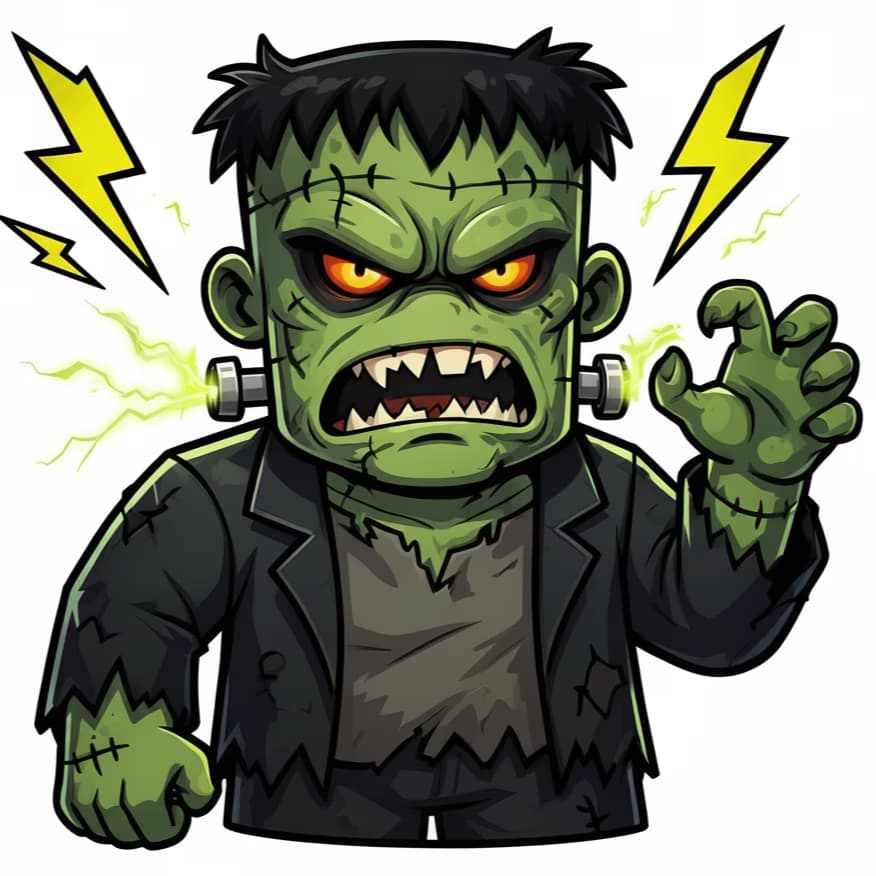
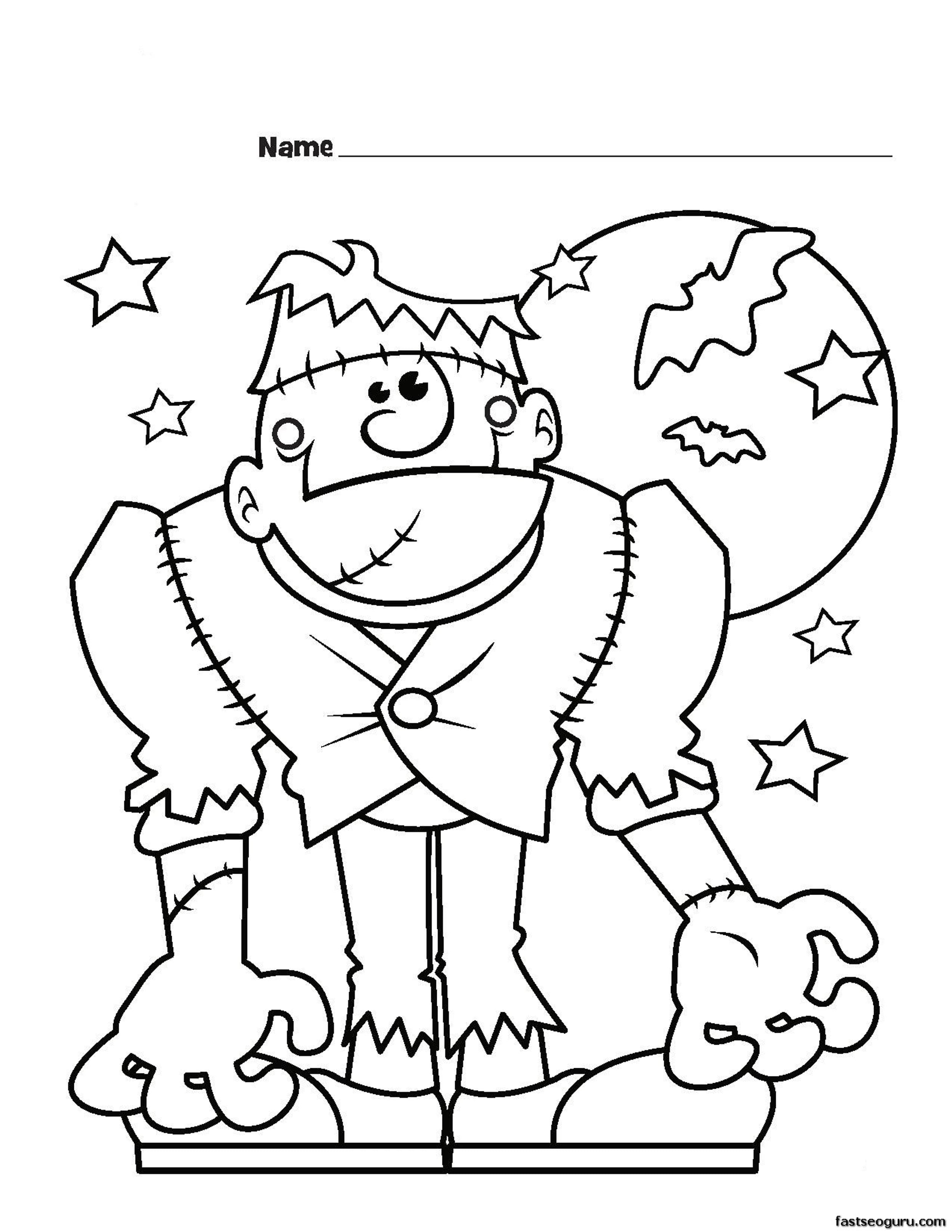
Our Coloring Pages collection brings together free, printable Frankenstein monster designs for children of all ages. From simple, friendly monsters for younger children to dramatic laboratory and night scenes for older kids and adults, every page is free to download and print at home or in the classroom. Frankenstein's monster is one of the most recognized Halloween characters in the – and one with a surprisingly rich literary and scientific history that makes these pages as educational as they are fun.
0 Topics1 Coloring Pages
🖍️ Frankenstein Coloring Pages
Sort by:
Advertisement (Header)
Advertisement (Row 1)
You've viewed all 1 coloring pages!
and – A Monster With a Story
Few Halloween characters carry as much genuine literary history as Frankenstein's monster. Unlike ghosts or skeletons, which developed from ancient folk belief over many centuries, Frankenstein's monster was created by a single author – an eighteen-year-old writer named Mary Shelley – on a stormy night in Switzerland in 1816. That story became one of the most influential novels ever written, and its central character became one of the most enduring Halloween icons of all time.
Frankenstein coloring pages give children a wonderfully dramatic creative subject. The green skin, flat-topped head, neck bolts, and stitched appearance of the classic monster make for a bold, immediately recognizable coloring subject, while more detailed laboratory and Halloween night scenes offer a satisfying challenge for older children who enjoy atmospheric artwork.
The History of Frankenstein
A Teenage Writer and a Stormy Night in Switzerland
In the summer of 1816, eighteen-year-old Mary Godwin – later known as Mary Shelley – was staying in Switzerland with her husband Percy Shelley, the poet Lord Byron, and their friend John Polidori. One stormy evening, the group challenged each other to each write a ghost story.
Mary Shelley was inspired both by this challenge among friends and by a vivid dream in which she imagined the moment her monster was conceived and rejected because of its monstrousness. After her dream, she began writing in earnest. The story she produced grew from a short tale into a full novel, published in 1818 under the title Frankenstein; or, The Modern Prometheus.
What Is the Story of Frankenstein?
In the novel, Victor Frankenstein is a Swiss student of natural science who creates an artificial man from pieces of corpses and brings his creature to life through science. He then flees from the monstrousness of his creation.
One of the most important and widely misunderstood facts about Frankenstein is that the monster itself is never given a name in the book. It is referred to as "monster," "creature," "daemon," and "it." Frankenstein is actually the name of the scientist, not the monster – though popular culture has attached the name to the creature for well over a century.
Study.com
In Mary Shelley's novel, the monster is presented as a lonely, sympathetic creature. He is violent, but justifies his violence as retribution for his loneliness and abandonment by his creator. This makes Frankenstein's monster one of the most complex and thought-provoking characters in all of horror fiction.
Study.com
From Novel to Halloween Icon
The 1931 Hollywood film Frankenstein, with Boris Karloff as the monster, was a massive success and was followed by dozens of variations on the story. It was this film – rather than Mary Shelley's original novel – that established the now-iconic visual image of the monster: green skin, flat-topped head, neck bolts, and heavy boots. The name Frankenstein is a German name meaning "Stone of the Franks."
By the mid-20th century, Frankenstein's monster had become one of the most recognized Halloween characters in Western culture, appearing on costumes, decorations, greeting cards, and coloring pages alongside Dracula, ghosts, and witches.
Frankenstein and Science – A Story About Playing God
One of the reasons Frankenstein has endured for over 200 years is that it raises genuinely important questions about science, responsibility, and what happens when human beings try to create life. Victor Frankenstein, in creating his monster, becomes in some ways a monster himself by interfering with natural order and bringing back the dead.
Mary Shelley was writing at a time when scientists were genuinely experimenting with electricity and its effects on living tissue – a field called galvanism. The idea that electrical current might be used to reanimate dead tissue was seriously discussed in scientific circles during the early 19th century. Shelley wove these real scientific ideas into her fictional story, creating a horror narrative that felt genuinely plausible to her readers.
This scientific dimension makes Frankenstein coloring pages a natural starting point for discussions about science, responsibility, and the difference between fiction and reality – making them one of the most educationally rich subjects in any Halloween coloring collection.
What Makes Frankenstein Coloring Pages Special
Frankenstein coloring pages offer children one of the most visually distinctive subjects in the entire Halloween collection. The classic monster design – green skin, flat head, neck bolts, stitched features, heavy boots – is instantly recognizable even to very young children, making it an approachable and satisfying coloring subject across a wide age range.
More detailed scenes featuring laboratory equipment, lightning bolts, crackling electricity, and gothic castle settings give older children and adults a dramatically rich coloring experience. The theatrical quality of Frankenstein imagery also makes completed pages some of the most striking Halloween display materials in the collection.
How to Use Frankenstein Coloring Pages at Home and in the Classroom
At Home
Set up a Halloween coloring station with Frankenstein pages alongside green, grey, and dark-colored pencils for dramatic effect. While children color, share simple age-appropriate facts about Mary Shelley and how she came to write Frankenstein at just eighteen years old. The story of a teenage writer creating one of the most famous monsters in literary history is genuinely inspiring for young readers and aspiring writers.
In the Classroom
Frankenstein coloring pages work well as Halloween party activity stations and early finisher tasks throughout October. Teachers can use them as starting points for creative writing – asking students to describe the monster's feelings, write a story from the creature's point of view, or imagine what would happen if Frankenstein's monster came to their school on Halloween night. Older students can read an age-appropriate version of Mary Shelley's novel, discuss the book's themes of creation and responsibility, or explore the history of galvanism and early electrical science that inspired the story.
Printing Tips for the Best Results
Print on white cardstock paper for the crispest lines and most dramatic coloring results. Set your printer to Fit to Page and High Quality for the sharpest output. All pages fit both US Letter (8.5 x 11 in) and A4 paper.
Classic Frankenstein colors work beautifully – pale or lime green for the skin, dark grey or black for the jacket and boots, and silver or metallic tones for the neck bolts. Add vivid yellow and white for lightning bolts in the background and deep blue or purple for a stormy laboratory sky. For a more playful approach, children can color their Frankenstein monster in any combination they like.
Short Fun Facts – Frankenstein ⚡🎃
Frankenstein was written by Mary Shelley in 1818, when she was just eighteen years old – making her one of the youngest authors of a major horror novel in literary history.
The monster in Mary Shelley's novel is never given a name – it is called "monster," "creature," and "daemon," but never Frankenstein. Frankenstein is the name of the scientist who created it.
The idea for Frankenstein came from a ghost story competition held on a stormy summer night in Switzerland in 1816, when Mary Shelley was staying with Percy Shelley, Lord Byron, and their friend John Polidori.
Frankenstein is a German name meaning "Stone of the Franks."
The 1931 Hollywood film Frankenstein, starring Boris Karloff as the monster, established the now-iconic visual image of green skin, flat head, and neck bolts – an image that does not appear in Mary Shelley's original novel.
Mary Shelley was inspired partly by galvanism – early 19th century scientific experiments exploring whether electricity could reanimate dead tissue – weaving real science into her fictional horror story.
The first film adaptation of Frankenstein was produced by Thomas Edison in 1910 – making it one of the earliest horror films ever made
In Mary Shelley's novel, the monster is presented as a lonely and sympathetic creature who justifies his violence as retribution for his abandonment by his creator – making him one of the most complex characters in horror fiction.
Why Kids Love Frankenstein Coloring Pages
Frankenstein's monster strikes a perfect Halloween balance – dramatic and slightly spooky in appearance, but fundamentally a sympathetic and misunderstood character that children often find more sad than scary. The bold, graphic design of the classic monster – green skin, neck bolts, flat-topped head – makes it one of the most immediately satisfying Halloween coloring subjects for children of all ages. Coloring Frankenstein pages builds fine motor skills, encourages bold and dramatic color choices, and gives children a satisfying screen-free activity connected to one of the most famous stories in literary history. Frankenstein pages also spark natural curiosity – prompting children to ask who Mary Shelley was, what galvanism is, and why a monster created to be frightening turned out to be one of Halloween's most beloved characters.
Frequently Asked Questions
Are these Frankenstein coloring pages free to print?
Yes, every page in this collection is completely free to download and print. No account or payment is required.
What paper size do these pages fit?
All pages fit both US Letter (8.5 x 11 in) and A4 paper perfectly.
What age group are Frankenstein coloring pages best for?
Simple cartoonFrankenstein designs work well for children aged 3 and up, while more detailed laboratory and Halloween night scenes are best suited to children aged 7 and up and older children and adults who enjoy detailed Halloween coloring.
Who created Frankenstein?
Frankenstein was created by Mary Shelley, who wrote the novel in 1818 at just eighteen years old. The story began as a ghost story challenge during a stormy summer evening in Switzerland in 1816, shared among Mary Shelley, Percy Shelley, Lord Byron, and their friend John Polidori.
Is Frankenstein the monster or the scientist?
In Mary Shelley's original 1818 novel, Frankenstein is the name of the scientist – Victor Frankenstein – who creates the monster. The monster itself is never given a name in the book. Popular culture has attached the name Frankenstein to the creature, but technically the monster has no name.
What colors should my child use for a Frankenstein coloring page?
Classic Frankenstein colors include pale or lime green for the skin, dark grey or black for the jacket, and silver for the neck bolts. Add yellow and white for lightning bolts and deep blue or purple for a stormy background. There are no rules – children can color their monster in any combination they like.
Why does Frankenstein's monster have bolts in his neck?
The neck bolts are not from Mary Shelley's original novel – they were introduced in the 1931 Hollywood film starring Boris Karloff. In the film, the bolts were used as electrodes to conduct the electrical current that brought the monster to life, and they became one of the most recognized features of the image ever since.
Can I use these pages in my classroom?
Yes. All pages are free to print for personal and classroom use, making them ideal for parties, creative writing lessons, literature discussions about Mary Shelley, and October activity stations.