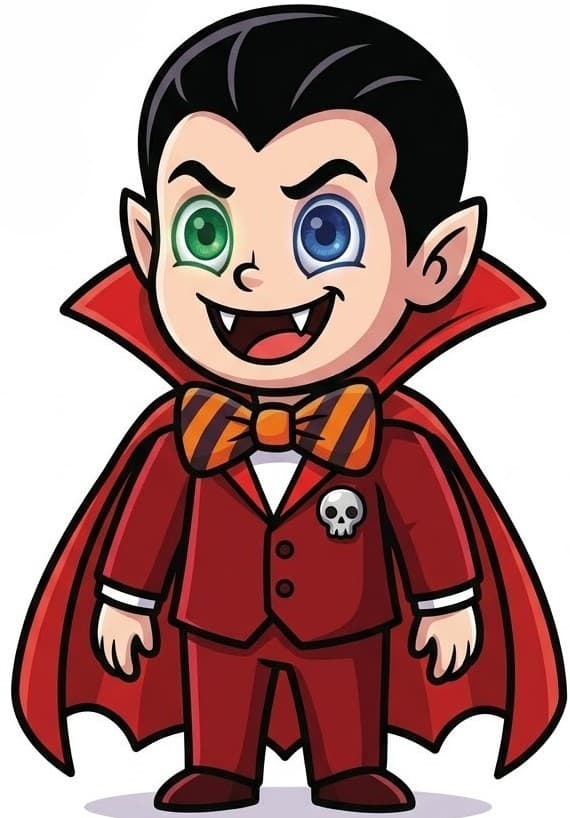
Our Coloring Pages collection brings together free, printable vampire designs for children of all ages. From friendly vampires for younger children to dramatic castle and moonlit night scenes for older kids and adults, every page is free to download and print at home or in the classroom. Vampires are one of 's most theatrical and enduring characters, with a rich history stretching back through centuries of folklore, literature, and film – making these pages a perfect choice for October activities, classroom Halloween parties, and creative crafts.
0 Topics0 Coloring Pages
🖼️
No coloring pages in this category yet
Be the first to upload a coloring page to the Vampire category!
Vampires and – A Theatrical Icon
Few Halloween characters are as dramatically recognizable as the – black cape sweeping, fangs gleaming, pale skin glowing in moonlight above a dark castle. The vampire has been a central part of Halloween culture for over a century, and it remains one of the most popular costume and coloring page subjects of the entire season.
Vampire coloring pages give children a wonderfully theatrical creative subject. A vampire can be friendly, funny, and completely unthreatening, while more detailed castle and moonlit scenes offer a satisfying challenge for older children who enjoy atmospheric Halloween artwork.
The History of Vampires
Ancient Vampire Legends
Belief in vampire-like creatures – beings that return from the dead to feed on the living – appears in the folklore of cultures across the and throughout human history. The first known written reference to vampires appeared in Old Russian in AD 1047. Vampire superstition was widespread across Eastern Europe, particularly in Hungary, Serbia, and Romania, long before the character became famous through literature.
During the Middle Ages, vampire belief was reinforced by the spread of disease. The Black Death left bleeding mouth lesions on its victims – which to many people at the time appeared to be signs of vampirism. Anyone with an unfamiliar physical illness could be labeled a vampire, and the legend grew stronger during times of plague, political upheaval, and religious change.
Dracula – The Novel That Shaped the Modern Vampire
Most modern ideas about vampires trace directly to Dracula, the 1897 novel by Irish author Bram Stoker. The main character, Count Dracula, is a vampire who lives in a creepy castle in Transylvania, a region in what is now Romania. He travels in the form of a bat, cannot be seen in mirrors, is repelled by garlic and crosses, and must return to his resting place before sunrise.
Count Dracula may have been partly inspired by a real historical figure – Vlad III of Transylvania, also known as Vlad the Impaler, a brutal 15th century prince known for his extremely cruel methods of punishing enemies. Historians debate how direct this connection was, but the geographic overlap between Vlad's homeland and Count Dracula's castle has made it one of the most discussed links in vampire history.
The 1931 Hollywood film adaptation of Dracula, starring Hungarian-born actor Bela Lugosi, brought the character to a mass audience and cemented the visual image of the vampire – pale skin, black cape, slicked hair, aristocratic manner – that remains the dominant Halloween vampire image today.
From Frightening Folklore to Beloved Halloween Character
Over the course of the 20th century, the vampire shifted from a genuinely feared figure in Eastern European folk belief to one of Halloween's most beloved and theatrical characters. Children's books, animated films, and family-friendly adaptations gradually made the vampire more playful and approachable. Today the Halloween vampire exists across a full range – from a dramatic, Gothic figure in a moonlit castle to a cheerful cartoon character with a friendly smile and an oversized cape.
What Makes Vampire Coloring Pages Special
Vampire coloring pages offer children a uniquely dramatic creative range. The classic visual elements – black cape, pale face, fangs, red eyes, moonlit castle, bats, coffin, gothic candles – combine to create some of the most visually striking Halloween imagery available. Every element of a vampire scene invites creative color choices and imaginative storytelling.
Younger children enjoy the bold, simple shapes of a cartoon vampire, while older children can tackle more detailed castle and night scenes with architectural details, bat swarms, moonlit skies, and elaborate costume elements. The theatrical quality of vampire imagery also makes completed pages some of the most striking Halloween display materials in the entire collection.
How to Use Vampire Coloring Pages at Home and in the Classroom
At Home
Set up a Halloween coloring station with vampire pages alongside dark-colored pencils, black markers, and red for dramatic effect. While children color, share simple age-appropriate facts about where the vampire legend comes from and why Dracula became such a famous character. Completed pages make striking Halloween window decorations and work well displayed alongside haunted house and bat pages from this collection.
In the Classroom
Vampire coloring pages work well as Halloween party activity stations and early finisher tasks throughout October. Teachers can use them as starting points for creative writing – asking students to name their vampire, describe the castle they live in, and write about what they do on Halloween night. Older students can explore the history of vampire folklore in Eastern Europe, read an age-appropriate version of Dracula, or discuss how the vampire character has changed from fearsome folk legend to popular culture icon over the past century.
Printing Tips for the Best Results
Print on white cardstock paper for the crispest lines and most dramatic coloring results. Set your printer to Fit to Page and High Quality for the sharpest output. All pages fit both US Letter (8.5 x 11 in) and A4 paper.
Classic vampire colors work beautifully – deep black and dark purple for the cape, pale grey or white for the skin, and vivid red for the eyes, mouth, and dramatic accents. Add deep blue and purple for a moonlit castle sky and warm orange for candles and torches. For a more playful interpretation, children can dress their vampire in any colors they like – a bright green vampire in a rainbow cape makes for wonderfully creative Halloween artwork.
Short Fun Facts – Vampires and Halloween 🧛🎃
The first known written reference to vampires appeared in Old Russian in AD 1047 – making vampire legends over a thousand years old.
Most modern vampire ideas come from the 1897 novel Dracula by Irish author Bram Stoker, in which Count Dracula lives in a castle in Transylvania, now part of Romania.
Count Dracula may have been partly inspired by a real historical figure – Vlad III of Transylvania, known as Vlad the Impaler, a brutal 15th century prince of Walachia, Romania
.
The 1931 Hollywood film adaptation of Dracula, starring Bela Lugosi, cemented the visual image of the vampire – pale skin, black cape, and aristocratic manner – that remains the dominant Halloween vampire image today.
According to vampire folklore, vampires cannot be seen in mirrors, are repelled by garlic and crosses, and must return to their resting place before sunrise.
Vampire superstition spread widely during the Middle Ages partly because plague victims sometimes displayed bleeding mouth lesions, which many people at the time interpreted as signs of vampirism.
In vampire folklore, a person bitten by a vampire could themselves become a vampire – making the vampire one of the few Halloween monsters associated with transformation rather than simply fear.
The word vampire likely entered the English language from Serbian and other Eastern European languages in the early 18th century, during a period of widespread vampire panic across parts of Eastern Europe.
Why Kids Love Vampire Coloring Pages
Vampires are one of the most theatrically exciting Halloween characters a child can color – and one of the most versatile. The combination of dramatic capes, moonlit castles, swooping bats, and gothic candles gives children a rich set of visual elements to work with, and the range of styles from friendly cartoon vampire to dramatic Gothic scene means there is a vampire coloring page suited to every age and skill level. Coloring vampire pages builds fine motor skills, encourages bold and dramatic color choices, and gives children a satisfying screen-free activity that connects naturally to some of the most famous stories and characters in Halloween history. Vampire pages also spark natural curiosity – prompting children to ask where the vampire legend comes from, who Dracula was, and why vampires became such a central part of Halloween culture.
Frequently Asked Questions
Are these vampire coloring pages free to print?
Yes, every page in this collection is completely free to download and print. No account or payment is required.
What paper size do these pages fit?
All pages fit both US Letter (8.5 x 11 in) and A4 paper perfectly.
What age group are vampire coloring pages best for?
Simple cartoonvampire designs work well for children aged 4 and up, while more detailed castle and Gothic night scenes are best suited to children aged 7 and up and older children and adults who enjoy detailed Halloween coloring.
Who is Dracula?
Dracula is a fictional vampire character created by Irish author Bram Stoker in his 1897 novel of the same name. Count Dracula lives in a castle in Transylvania, now part of Romania, and is the most famous vampire character in Western culture. Most modern Halloween vampire imagery is based on Dracula and the 1931 film adaptation of the novel.
Was Dracula based on a real person?
Count Dracula may have been partly inspired by Vlad III of Transylvania, known as Vlad the Impaler, a real and historically documented 15th century prince known for his brutal methods of punishing enemies. Historians debate how direct this connection was, but the geographic and name overlap has made it one of the most discussed links in vampire history.
What colors should my child use for a vampire coloring page?
Deep black and dark purple work beautifully for the cape, pale grey or white for the skin, and vivid red for eyes and dramatic accents. Add deep blue and purple for a moonlit sky and warm orange or yellow for castle windows and candlelight.
Why are vampires associated with Halloween?
Vampires became part of culture through centuries of Eastern European folklore about the undead, reinforced by Bram Stoker's 1897 novel Dracula and the hugely popular 1931 Hollywood film adaptation. By the mid-20th century, the had become one of the most recognized Halloween costume and decoration characters alongside ghosts, witches, and skeletons.
Can I use these pages in my classroom?
Yes. All pages are free to print for personal and classroom use, making them ideal for parties, October activity stations, creative writing lessons, and discussions about folklore, literature, and Halloween history.