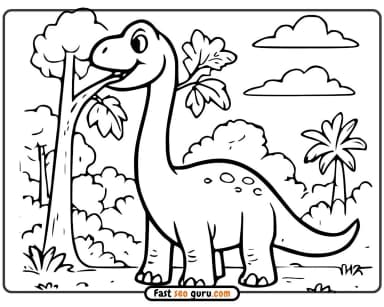
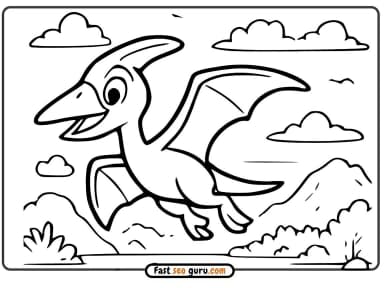
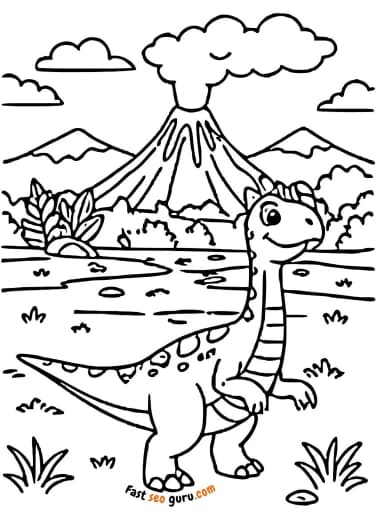
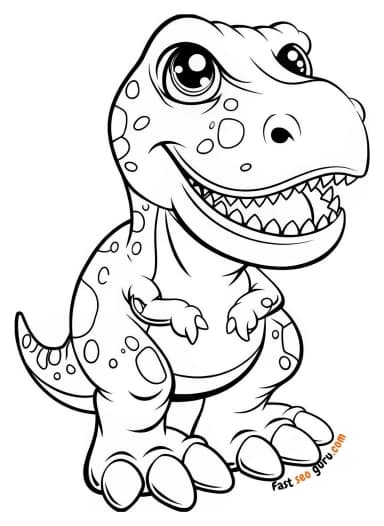
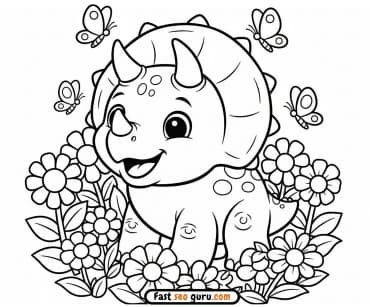
Meet one of the most unique dinosaurs that ever lived with our Parasaurolophus Coloring Page – Free Printable Pictures to Color for Kids! This free, printable coloring sheet features the famous crested duck-billed in stunning detail. Perfect for children aged 3 and up, dinosaur fans, parents, and teachers looking for a fun educational activity that builds creativity, fine motor skills, and a love of prehistoric science.
Meet the Parasaurolophus – The Dinosaur That Could Sing
About 75 million years ago, herds of dinosaurs with impressive crests on their heads grazed along shorelines in what is now western North America. The Parasaurolophus was one of the most distinctive dinosaurs to ever walk the Earth, instantly recognizable by its extraordinary hollow curved crest extending backwards from the top of its skull.
Parasaurolophus grew to an adult length of about 33 feet (10 meters), a height of 15 feet (4.6 meters), and a weight of 3 to 4 tons. Despite its impressive size, this gentle giant was a peaceful plant-eater that spent its days grazing on ferns, leaves, and vegetation across the lush forests of Late Cretaceous North America.
The Famous Crest – Nature's Built-In Musical Instrument
The crest of the Parasaurolophus is one of the most fascinating structures in the entire dinosaur . Inside the crest, paired nasal passages extended from the nostrils to the tip and then curved back down to the snout. This created a hollow tube that functioned like a natural musical instrument.
Scientists made the discovery by examining the tubelike holes inside the crest. One paleontologist created a replica using plastic pipes he could blow into – and out came a trumpetlike B-flat note. This means Parasaurolophus could produce loud, low-frequency calls to communicate with other members of its herd – warning them of danger, attracting mates, and keeping the group together through dense prehistoric forests.
A Duck-Billed Dinosaur Built for Eating
Parasaurolophus belonged to the hadrosaur family – commonly known as duck-billed dinosaurs because of the distinctive flat shape of their beaks. But the beak was far more sophisticated than it looks. Parasaurolophus used its beak to bite off plant material, then passed the food to grinding teeth further back in the mouth, with powerful jaw muscles and multiple rows of teeth working together to thoroughly chew the food before swallowing.
This highly efficient chewing system set hadrosaurs apart from most other dinosaurs and allowed them to extract maximum nutrition from tough vegetation that other plant-eaters could not process as effectively. It was one of the key reasons hadrosaurs were among the most successful dinosaur families of the Late Cretaceous period.
How to Use This Coloring Page in the Classroom
This Parasaurolophus coloring page is a wonderful addition to any dinosaur or science unit. Teachers can use it to introduce concepts like herbivores vs carnivores, communication, and prehistoric ecosystems. Children can color the page while listening to audio recreations of what the Parasaurolophus call may have sounded like – making for an unforgettable multisensory learning experience.
Printing Tips for the Best Results
For the sharpest lines and most vibrant colors, print on white cardstock paper using your printer's "Fit to Page" and "High Quality" settings. The Parasaurolophus looks spectacular in rich greens and earthy browns with a brightly colored crest – scientists believe the crest may have been vividly colored to attract mates and communicate between herd members!
Why Kids Love This Coloring Page
Few dinosaurs fire up a child's imagination quite like the Parasaurolophus – a giant that could sing! The dramatic curved crest, the duck-shaped beak, and the herd lifestyle make this dinosaur feel almost friendly and approachable. Coloring the detailed outline builds fine motor skills, concentration, and color recognition, while the fascinating science behind the crest naturally sparks questions about animal communication and prehistoric life. It is a screen-free activity that turns coloring time into a genuine paleontology adventure.